
24/7 Service for Water Damage Emergency
24/7 Service for Water Damage Emergency
The right size is not determined by room area alone. Before arranging an industrial dehumidifier rental, consider room volume, the amount of water absorbed by materials, temperature, airflow, and whether standing water has been extracted. A drying equipment rental provider should use the site's moisture conditions to recommend a unit or multi-unit setup. There is no reliable universal room-size chart for every water-damage loss.
Find industrial dehumidifiers alongside air movers, moisture meters, air scrubbers, and other restoration equipment from Restoration Express for rent. These machines perform different jobs: air movers encourage evaporation from wet surfaces, dehumidifiers remove moisture from the air, and meters help track whether materials are actually drying.
Measure the length, width, and ceiling height to understand the volume of air being treated. Then consider how much material has been affected by water damage. A room with a small localized damp area has a different moisture load from a basement where drywall, framing, flooring, and contents are saturated. The wetter and more absorbent the materials, the more moisture the drying system must manage.
A dehumidifier is not a substitute for water extraction. Pools of water and heavily soaked removable materials should be addressed before relying on evaporation and dehumidification. Once bulk water is removed, airflow can help move moisture from surfaces into the air, where the dehumidifier can collect it. Restoration Express's overview of equipment used for drying after a flood explains how these equipment categories work together.
Dehumidifier performance changes with temperature and relative humidity, and each model has an operating range. Air must also move effectively through the affected space. Closed doors, divided rooms, cabinets, wall cavities, and poor circulation can leave damp zones even when the main room feels dry. Equipment placement and air-mover positioning should reflect the actual layout.
Do not choose an industrial dehumidifier rental once and assume the initial setup will remain correct. Track relative humidity and take moisture readings from affected materials during the project. Surface feel is not a reliable way to confirm that wood, drywall, subfloors, or framing are dry. Monitoring shows whether conditions are improving and whether equipment placement or capacity needs to change.
Large, highly saturated, or divided spaces may require more than one dehumidifier or a combination of units and air movers. The decision should be based on moisture load, room configuration, model specifications, and ongoing readings, not a guessed unit count. Restoration Express can review the affected area and help assemble a drying equipment rental setup that reflects the conditions found on site.
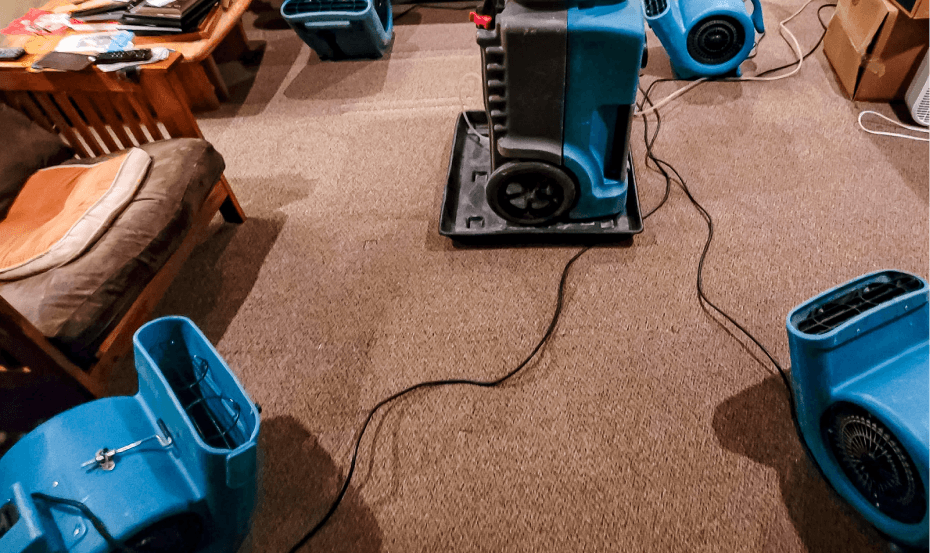
Rent our professional-grade drying equipment today and get the water removed and the affected areas dried out quickly and efficiently. Get in touch to learn more and to rent the equipment you need.


